

retroshelf
Retroshelf automatically logs your retro handheld gaming sessions, tracks trends, and connects you with fellow players.
product Details
Explore More
Alternatives
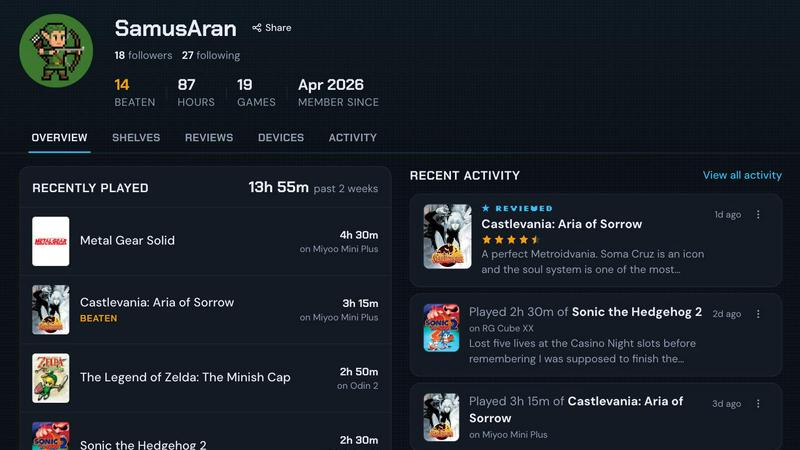
About retroshelf
retroshelf is an innovative play-tracking and discovery application specifically designed for retro handheld gaming enthusiasts. At its core, retroshelf solves a fundamental problem for players who own multiple retro handheld devices: keeping an accurate, unified record of what they have played, finished, reviewed, and replayed across different platforms. Instead of relying on scattered notes, spreadsheets, or memory, users gain a single, public shelf that automatically logs every gaming session. This shelf provides essential context by capturing not just the game title and playtime, but also the specific handheld device used for each session. The platform is built around a tiny plugin that runs directly on supported handheld devices, such as those running muOS or OnionOS. Once installed and linked, this plugin works silently in the background, recording session data without any manual input required from the user. The result is a browsable, comprehensive history of a player's gaming journey, presented as a timeline that can be revisited and reflected upon. Beyond personal tracking, retroshelf serves as a discovery engine for the retro gaming community. Users can browse the shelves of other players, see which games are popular in real time, and filter by specific devices like Miyoo, Anbernic, or Odin. This transforms individual play data into a community resource, helping players find new games to try based on authentic, device-specific experiences. retroshelf is currently in a closed beta phase, inviting passionate retro handheld players to help shape the community from the beginning. The product is built for anyone who values remembering their gaming history, discovering new titles through real player shelves, and connecting with a like-minded community of retro gaming enthusiasts.
Features
Automatic Session Logging
The cornerstone of retroshelf is its ability to log gaming sessions automatically. A tiny, lightweight plugin is installed on the user's SD card for supported operating systems like muOS and OnionOS. Once the device is linked to a retroshelf account, every gaming session is captured without any manual effort. The plugin records the game title, the exact minutes played, and the specific handheld device used. This eliminates the need for players to stop and note down their sessions, ensuring that no playtime is ever lost or forgotten. The shelf updates in real time, often while the player is still in the middle of their gaming session. This seamless integration turns a passive activity into an automatically documented experience, providing a rich dataset for personal reflection and community sharing.
Public Shelf and Timeline
Every user on retroshelf has a public shelf that serves as a living portfolio of their gaming activity. This shelf is organized into clear categories: currently playing, finished games, games under review, and games being replayed. Each entry includes the game title, total playtime, and the device on which it was played. The platform transforms scattered sessions across multiple handhelds into a unified, browsable timeline. Users can look back at their year of play and see exactly what they played, where they played it, and when they finished it. This feature is invaluable for players who own several devices and want a single source of truth for their gaming history. The timeline makes it easy to track progress, identify patterns in play style, and celebrate accomplishments like finishing a classic title.
Community Discovery and Browsing
retroshelf is not just a personal tracker; it is a powerful discovery tool for the retro gaming community. The platform features a "Popular this week" section that shows what games other players are picking up, finishing, and replaying in real time. Users can browse by specific devices, filtering shelves to see only games played on a Miyoo, Anbernic, Odin, or other supported handhelds. This device-specific context is crucial for retro gaming, as performance and experience can vary greatly between devices. Reviews and star ratings are accompanied by the handheld context in which they were created, providing more meaningful feedback than a simple number. Every game page shows who is playing it, on what handheld, and for how long, giving users authentic insights into how a game performs and feels on different hardware.
Plugin-Based Device Integration
The technical backbone of retroshelf is its plugin system, which enables seamless integration with a growing list of retro handheld operating systems. Currently, the platform supports muOS and OnionOS, with the potential for expansion. Setting up the plugin is a straightforward three-step process: drop the plugin file onto the device's SD card, link the device to a retroshelf account, and sessions begin logging automatically. This design philosophy prioritizes simplicity and user experience, ensuring that even non-technical users can get started quickly. The plugin operates in the background without interfering with gameplay, consuming minimal system resources. This feature sets retroshelf apart from manual tracking solutions, as it removes all friction from the logging process. The result is a complete, accurate, and effortless record of every gaming session, captured directly from the source.
Use Cases
Tracking a Multi-Device Gaming Collection
Many retro gaming enthusiasts own multiple handheld devices, each with its own library and purpose. For example, a player might use a Miyoo Mini for short pick-up-and-play sessions, an Anbernic RG35XX for longer RPGs, and an Odin for more demanding retro systems. Without a unified tracker, it becomes nearly impossible to remember which games were played on which device, how much time was spent on each, and what progress was made. retroshelf solves this by aggregating all session data from every linked device into a single, coherent timeline. The player can instantly see their total playtime across all devices, identify which handheld gets the most use, and recall exactly where they left off in a game. This use case is essential for collectors and power users who want a comprehensive overview of their gaming habits.
Discovering New Games Through Real Player Shelves
Instead of relying on algorithm-driven recommendations or generic review aggregators, retroshelf allows users to discover games by browsing the actual shelves of other players. A user interested in finding a good game for their Anbernic device can filter the community shelves to see only games played on that specific handheld. They can then examine the playtime, completion status, and device-specific reviews from real players who own the same hardware. This provides authentic, contextual recommendations that are far more reliable than broad-stroke reviews. For example, a player might discover that a particular SNES title runs beautifully on the Miyoo Mini, with long battery life and smooth emulation, based on the logged sessions of community members. This peer-driven discovery model builds trust and helps players make informed purchasing and downloading decisions.
Reflecting on a Year of Gaming
At the end of a gaming year, many players enjoy looking back at their accomplishments and play patterns. retroshelf makes this reflection effortless by providing a complete, browsable timeline of every session played across all linked devices. A user can scroll through their year of play and see exactly when they started and finished each game, which devices they favored during different months, and how their gaming tastes evolved. This timeline can be shared with friends or kept as a personal digital diary. It also helps players identify trends, such as a preference for shorter arcade games during busy periods or a deep dive into a lengthy RPG during a vacation. This use case transforms raw play data into a meaningful narrative of a player's year, reinforcing the value of every gaming moment.
Creating Device-Specific Reviews for the Community
retroshelf empowers users to leave reviews and ratings that are inherently tied to the handheld device they used. When a player finishes a game, they can write a review that automatically includes the device context. This is incredibly valuable for other community members who are considering playing the same game on similar hardware. For instance, a review of "Final Fantasy VI" played on an Odin will include information about performance, screen size, and battery drain, which is directly relevant to other Odin owners. Over time, each game accumulates a collection of device-specific reviews, creating a rich knowledge base. This turns the community into a collaborative resource where players help each other optimize their gaming experiences. It also encourages thoughtful, contextual feedback rather than generic star ratings.
Frequently Asked Questions
What operating systems does retroshelf currently support?
retroshelf currently supports muOS and OnionOS for retro handheld devices. These are popular custom firmware options that run on a wide range of devices like the Miyoo Mini, Anbernic RG35XX series, and others. The platform is actively exploring support for additional operating systems in the future. Users can check the official retroshelf website or join the community Discord for the latest updates on supported platforms. The plugin is designed to be lightweight and non-intrusive, working seamlessly with these operating systems to log sessions automatically.
How does the automatic session logging plugin work?
The plugin is a small file that users drop onto the SD card of their supported handheld device. After linking the device to a retroshelf account through a simple setup process, the plugin runs in the background during gameplay. It automatically detects when a game is launched and when a session ends, recording the game title, the exact minutes played, and the device identifier. This data is then synced to the user's retroshelf account, updating their public shelf in near real-time. No manual input or note-taking is required, making the entire process effortless and accurate.
Is my gaming data private or public by default?
Every user on retroshelf has a public shelf by default, which is a core feature of the platform's community-driven design. This shelf displays the games you are currently playing, have finished, are reviewing, and are replaying, along with playtime and device context. The intention is to foster discovery and connection within the retro gaming community. However, users have control over what appears on their shelf. For specific questions about privacy settings and data visibility, it is recommended to review the platform's privacy policy or contact the retroshelf team through their official channels.
Can I use retroshelf with multiple handheld devices at the same time?
Yes, retroshelf is designed specifically for users who own multiple retro handheld devices. You can install the plugin on each supported device and link them all to a single retroshelf account. The platform will then aggregate session data from all linked devices into one unified timeline and public shelf. This allows you to see your complete gaming history across your entire collection, making it easy to compare playtime between devices, track progress on different systems, and present a holistic view of your gaming activity to the community.
Similar to retroshelf

Caesura
Caesura is a macOS menu-bar app that reminds you to drink water, stretch, rest your eyes, and breathe on science-backed intervals.

PrettyScale
PrettyScale offers free, private AI face analysis tools that run entirely in your browser with no uploads or accounts needed.

Burge Coffee
Burge Coffee offers a free, private home roasting guide with tools and roaster maps for serious coffee lovers.
On Music AI
On Music AI transforms text, lyrics, or ideas into complete songs with vocals, beats, and instrumentals in minutes.

Bloom Plant ID
Bloom Plant ID identifies plants, diagnoses issues, and provides personalized watering reminders to help you care with confidence.
HavenBook
HavenBook uses AI to create a personalized home maintenance plan, preventing costly repairs and protecting your investment.
NinjaHackz
NinjaHackz offers a portable, customizable CS2 cheat with aimbot and wallhack for an enhanced gaming experience without limits.

True Moments
True Moments animates your photos with natural movement in under 60 seconds, turning static memories into shareable videos.